

Which Telefunken Microphone Should You Buy? A Guide to Our Range
The most useful way to choose a Telefunken microphone is to start with the recording or performance job. A handheld microphone for live vocals, a small-diaphragm condenser for acoustic instruments and a tube microphone for studio work solve different problems. This guide maps the Telefunken models currently available at ScaleNordic to those decisions.
Start with your main use
For a handheld vocal microphone, compare M80 and M81. For acoustic instruments and stereo recording, look at the M60 Cardioid packages. For a large-diaphragm tube microphone, compare the TF39 and TF47. Then decide which features and voicing your setup can actually use.
| Your priority | Models to shortlist | Starting question |
|---|---|---|
| Handheld vocals | M80 White / M81 Gold — Custom Finish | More presence or a smoother top end? |
| Acoustic instrument recording | M60 Cardioid | One focused track or stereo? |
| Stereo instrument capture | M60 Cardioid Stereo Set | Do you have two suitable mic inputs? |
| Studio tube recording | TF39 / TF47 | Copperhead balance or a fuller, more forward voicing? |
For live vocals: M80 or M81
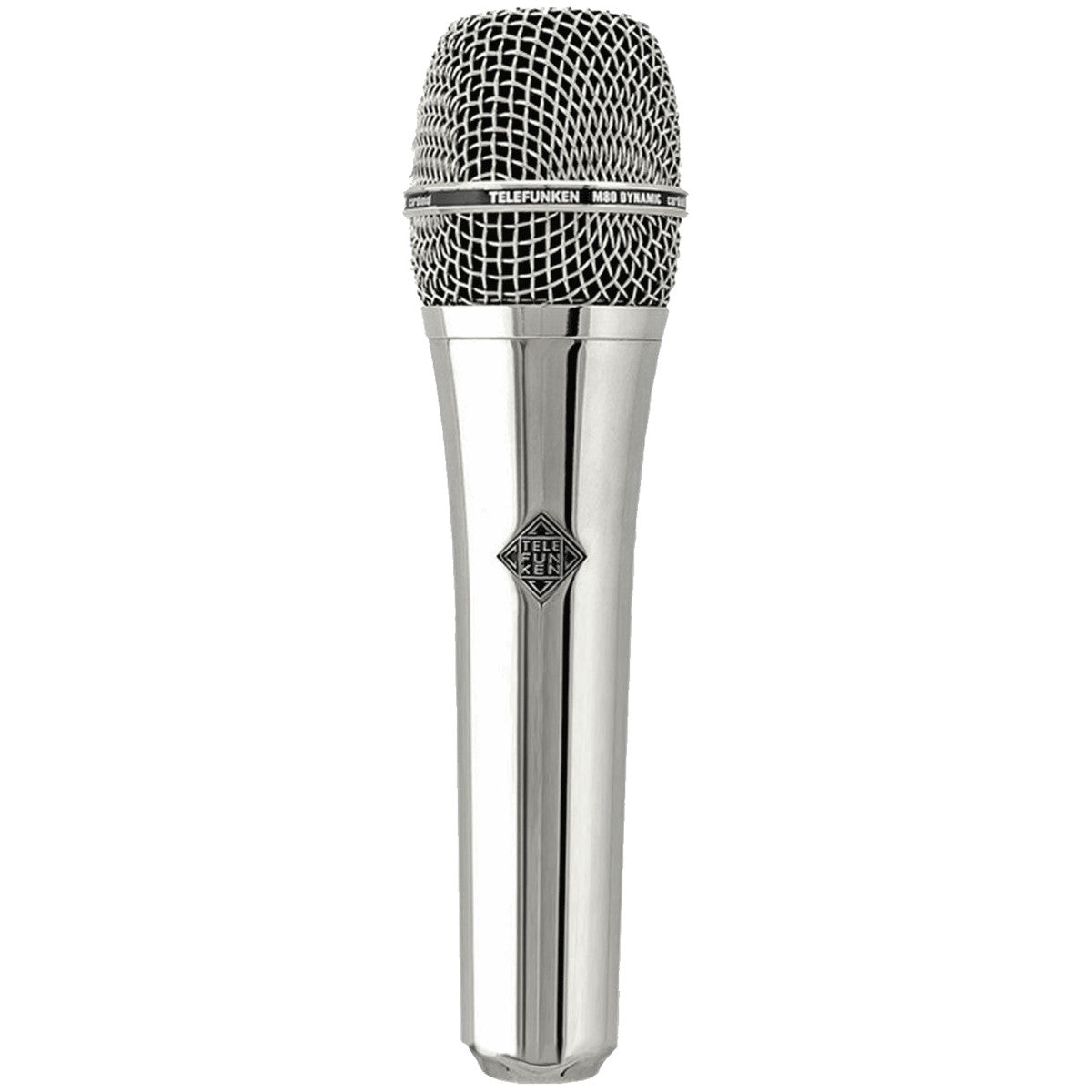
Both are supercardioid dynamic microphones. The M80’s documented response emphasizes presence and high-frequency extension. The M81 takes a smoother approach to the top end and is also listed for guitar amplifiers, toms and other instruments.
Think about what you keep changing on your current vocal sound. If you want more definition, the M80 belongs on the shortlist. If you regularly reduce brightness, the M81 may be the more useful starting point. The final choice still depends on your voice, mic technique and sound system.
Current ScaleNordic availability: the standard M81 is sold out. The M81 Gold Custom Finish is the M81 version currently available in our range.
At the current check, the M80 White is €259.99. The M80 Chrome, M80 Copper and M81 Gold are €379.99 each. These are Custom Finish versions; the finish changes the appearance, not the underlying M80 or M81 model response. The standard M81 is no longer included in this guide because it is currently sold out.
For acoustic instruments: M60 Cardioid

The M60 is a phantom-powered FET condenser with an interchangeable capsule system. The Cardioid package sold here contains the TK60 capsule. Its listed applications include acoustic guitar, percussion and drum overheads, making it a different kind of tool from the handheld dynamics.
The single package was €699.99 and the Cardioid Stereo Set €1,325.99 at the check. Choose one for a mono instrument track. Choose the set when you have a reason to capture a stereo image and two suitable microphone inputs. The stereo package includes matched cardioid capsules; it should not be confused with a Master Set containing other capsule types.
For studio tube microphones: TF39 or TF47
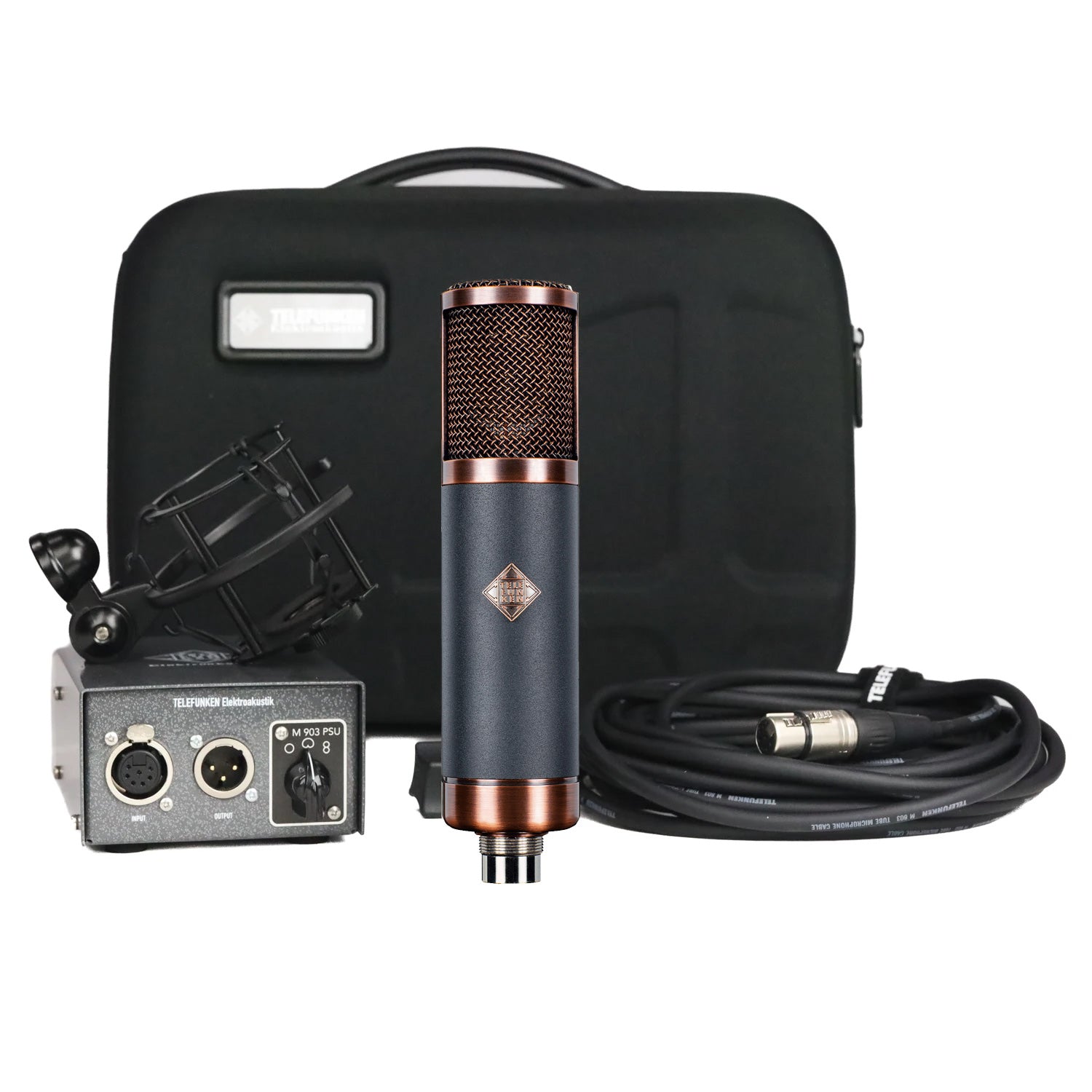
The TF39 is €1,549.99 and offers cardioid, omni and figure-8 patterns. It follows the Copperhead design and is the more natural starting point when flexible polar-pattern choice is part of your recording technique.
The TF47 is €1,799.99. It also offers three patterns, but its listed K47-style capsule, 5840W tube and BV8 transformer form a different design from the TF39. Its documented voicing emphasizes a fuller low end and forward midrange. Compare the two by the sound and recording role you need rather than treating the higher price as an automatic upgrade.
These tube models are systems with an external supply and a dedicated microphone connection. Plan their setup around the supplied instructions and verify the exact included accessories. The power and cabling requirements differ from those of a handheld dynamic microphone.
Current prices across the range
| Model or package | ScaleNordic price |
|---|---|
| M80 White | €259.99 |
| M80 Chrome / M80 Copper — Custom Finish | €379.99 each |
| M81 Gold — Custom Finish | €379.99 |
| M60 Cardioid | €699.99 |
| M60 Cardioid Stereo Set | €1,325.99 |
| TF39 | €1,549.99 |
| TF47 | €1,799.99 |
Prices and availability checked on 22 September 2026 for Spain, in EUR. The products listed in this table were in stock at that check. The standard M81 was sold out and is therefore not included. Prices and availability can change; confirm the selected model, destination and delivery charges before ordering.
Compare offers on the same basis
Match the exact model, finish and package when comparing retailers. An M80 White is not the same finish as an M80 Chrome or M80 Copper, and an M60 Cardioid Stereo Set is not a Master Stereo Set. Also check whether an offer is new, used or B-stock, which accessories are included, and the delivered total for your country.
A percentage saving is only useful when its reference price is clear. Use the current product prices above as a starting point and compare like for like. Delivery, local tax presentation and availability can change the practical value of an offer.
Three checks before choosing
- Recording chain: confirm suitable microphone inputs, required power and the complete cable route.
- Room and placement: leave time and budget for a stable setup; an expensive microphone still records the position and space around it.
- Main job: choose for the sessions you make most often, then assess whether versatility or a more specialized sound matters more.
Choose for your next session: four worked examples
You sing live and also record demos
Start with the handheld M80 and M81 decision. Your regular stage job gives you a clear place to evaluate intelligibility, comfort and monitoring, and the same microphone can be connected to a suitable interface for demo recording. Choose the M80 when its presence-focused response is the direction you need to explore, or the currently available M81 Gold Custom Finish when the smoother M81 balance is the better starting point.
A studio tube system is a separate purchase decision with different power, mounting and cabling requirements. It may belong in a later recording setup, but it is not the automatic next step for someone whose immediate need is a practical handheld vocal microphone. Solve the most frequent job first, then add tools for clearly different sessions.
You record acoustic guitar beneath a vocal
A single M60 Cardioid gives you one instrument track to place in the arrangement. Begin there if the guitar mainly supports the song and you want a straightforward recording process. If the guitar is the main performance and the stereo perspective is part of the intended sound, assess the matched set and the two-input requirement together.
Remember that two guitar microphones plus a separate vocal microphone require three recording channels when tracked simultaneously. A stereo set does not by itself provide a complete singer-songwriter recording system. Count the sources you want to capture at the same time before choosing the interface and microphone combination.
You are building a dedicated vocal recording space
Start with the TF39 if you want the Copperhead design with cardioid, omni and figure-8 available in one system. Bring the TF47 into the audition when you want to evaluate its distinct design, fuller low end and more forward midrange. Treat them as two different studio choices rather than as a simple lower-model/higher-model ladder.
Leave room in the budget for a stable stand, suitable mounting, a pop filter where needed and the audio connection from the supply to the preamp. Evaluate the room before spending the entire budget on the microphone. A premium recording system still captures the performance and acoustic environment placed in front of it.
You already own several microphones
Look for an unfilled job. Another handheld may be useful for a particular singer, the M60 set may add planned stereo instrument work, and a multi-pattern tube microphone may provide a new recording perspective. Compare the candidate with what you already use on the same source. The most valuable addition is the one that expands your useful choices, not necessarily the most expensive item in the range.
Understand the recording chain before you order
These are microphone choices for an audio recording or sound-reinforcement chain, not all-in-one USB recording devices. At a basic level, a microphone signal needs a suitable microphone preamp and a route into the recording system or mixer. Confirm the input type, cables and power requirements for the exact model rather than assuming every XLR microphone connects in the same way.
The M60 uses phantom power from an appropriate input. The TF-series tube microphones use their dedicated supply and microphone cable as part of the system. Follow the instructions for that system; supplying phantom power at an interface is not a substitute for the tube microphone’s external supply. Check what is included before adding accessories that may already be in the package.
Spend the budget on a complete usable setup
Separate the microphone price from the total project cost. List the stand, mounting arrangement, cables, interface channels and any practical room improvements you need. An attractive microphone price is less useful if the remaining budget cannot support the intended session. Conversely, an included cable or mount has value only if it suits the way you will use the equipment.
Finishes are a second decision within the handheld range. At the check, choosing M80 White instead of M80 Chrome or Copper left €120 in the budget. The currently available M81 option is the M81 Gold Custom Finish at €379.99. These price differences reflect the listed finish and current assortment, not evidence that one finish has a better or worse capsule. Spend more on appearance when it matters to your stage presentation, but assess sound by model and application.
How to narrow the range without hearing every microphone
Write down the source, the problem with the current result and the recording constraints. “Acoustic guitar, one available mic input, needs a focused supporting part” points toward a different shortlist from “vocals and room recordings, two available inputs, wants selectable patterns.” This first filter can remove unsuitable options before you compare audio samples.
Then listen to demonstrations using sources similar to yours and look for details about processing, distance and recording chain. Use those examples to decide what to audition, not as a promise that your room and performer will sound identical. If you can test a microphone, compare at matched playback levels and listen in the intended arrangement. Keep notes on what becomes easier to record or mix: that is the improvement you are buying.
Frequently asked questions
Which is the cheapest Telefunken microphone in this range?
At the current check, the M80 White is the lowest-priced available microphone in this guide at €259.99. The currently available M81 option is the M81 Gold Custom Finish at €379.99.
Which should I choose for a first studio microphone?
Start with your source and interface. Acoustic instrument work may point toward the M60, while a tube-vocal workflow may lead to the TF39 or TF47 depending on the voicing and recording flexibility you want. There is no single model that is best for every first studio.
Does ScaleNordic carry every Telefunken model?
This guide covers the models verified in our current range. It is not a catalog of every microphone the manufacturer makes. Check the collection for the latest assortment.
Find the model that fits your work
Explore the Telefunken range at ScaleNordic → Check the exact model, finish and package, then build the rest of the recording setup around it.
Compiled from current ScaleNordic product listings and the Telefunken Dynamic Series manual, Telefunken M60 FET / SDC manual and Telefunken Alchemy Series manual. This selection guide does not claim hands-on tests or a market-wide lowest-price guarantee.