

Fluid Audio Axis: The Studio Microphone That Deserves More Attention
Fluid Audio is a name most musicians and recording engineers associate with studio monitors.
That reputation is well deserved. But it may also be one reason why one of the company’s most interesting products has received considerably less attention than it deserves.
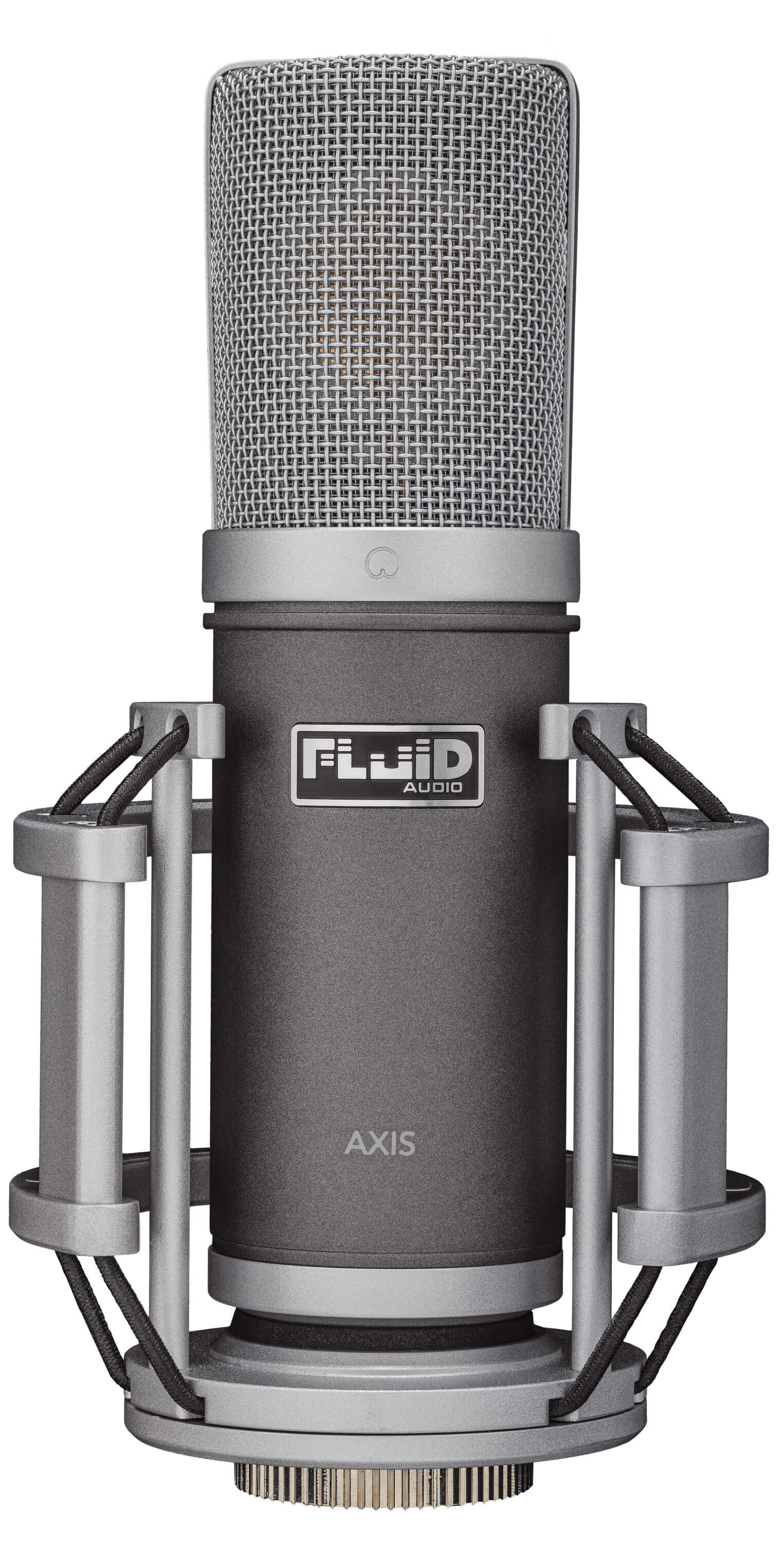
The Fluid Audio Axis is a large-diaphragm cardioid condenser microphone designed for vocals, acoustic instruments, percussion, guitar cabinets, piano, overheads, podcasting, streaming and general studio recording.
On paper, the specifications are serious. In practice, independent reviewers from Amazona, MusicRadar, Bonedo and Recording Magazine also found plenty to like.
Quick Answer
Is the Fluid Audio Axis a good studio microphone? Yes. Axis is a versatile large-diaphragm condenser microphone built around a 34 mm gold-sputtered capsule, discrete Class-A FET electronics and a transformer-coupled balanced output. It offers 16 dBA self-noise, 136 dB maximum SPL and has received positive reviews from several established music and recording publications.
Contents
- Why the Fluid Audio Axis deserves more attention
- A serious large-diaphragm condenser design
- What does the Fluid Audio Axis sound like?
- Professional reviews of the Fluid Audio Axis
- What can you record with Axis?
- A complete recording package
- Fluid Audio Axis specifications
- Why Axis is particularly interesting today
- Who is the Fluid Audio Axis for?
-
Frequently asked questions
Why the Fluid Audio Axis Deserves More Attention
Brand recognition matters in professional audio.
When somebody starts looking for a studio microphone, it is natural to begin with brands that have been associated with microphones for decades.
Fluid Audio entered the market from a very different direction.
The company became known primarily for its active studio monitors and loudspeaker designs. That means many musicians who recognise the Fluid Audio name may never have considered looking to the company for a microphone.
Axis was Fluid Audio’s first microphone, but it was not approached like a simple accessory added to the company’s product range.
It is a proper large-diaphragm condenser built for a wide range of studio applications, supplied with an unusually comprehensive collection of accessories and designed to work as an everyday recording microphone.
Perhaps most importantly, professional reviewers actually put it to work on vocals and instruments — and the results were consistently positive.
A Serious Large-Diaphragm Condenser Design
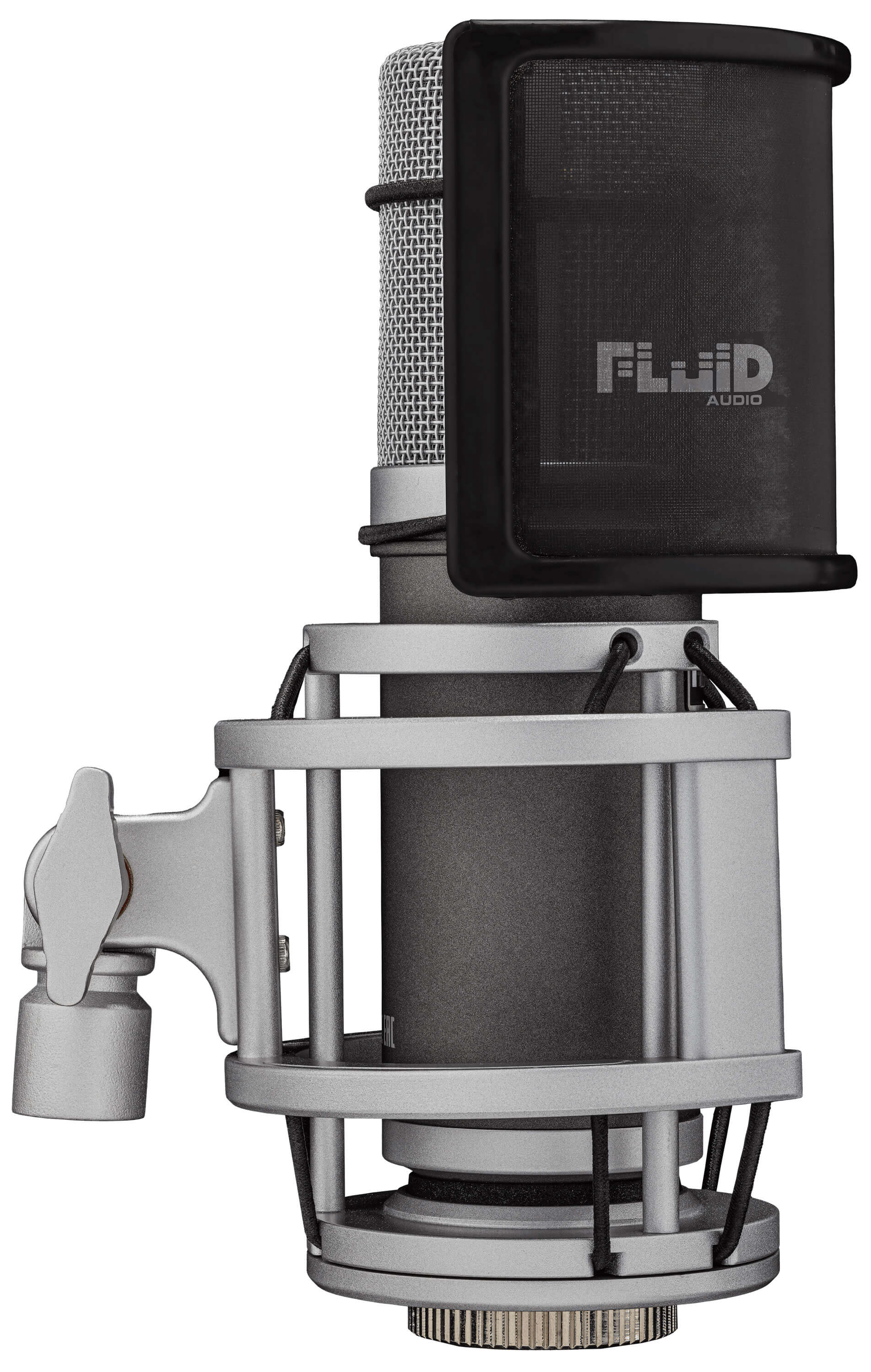
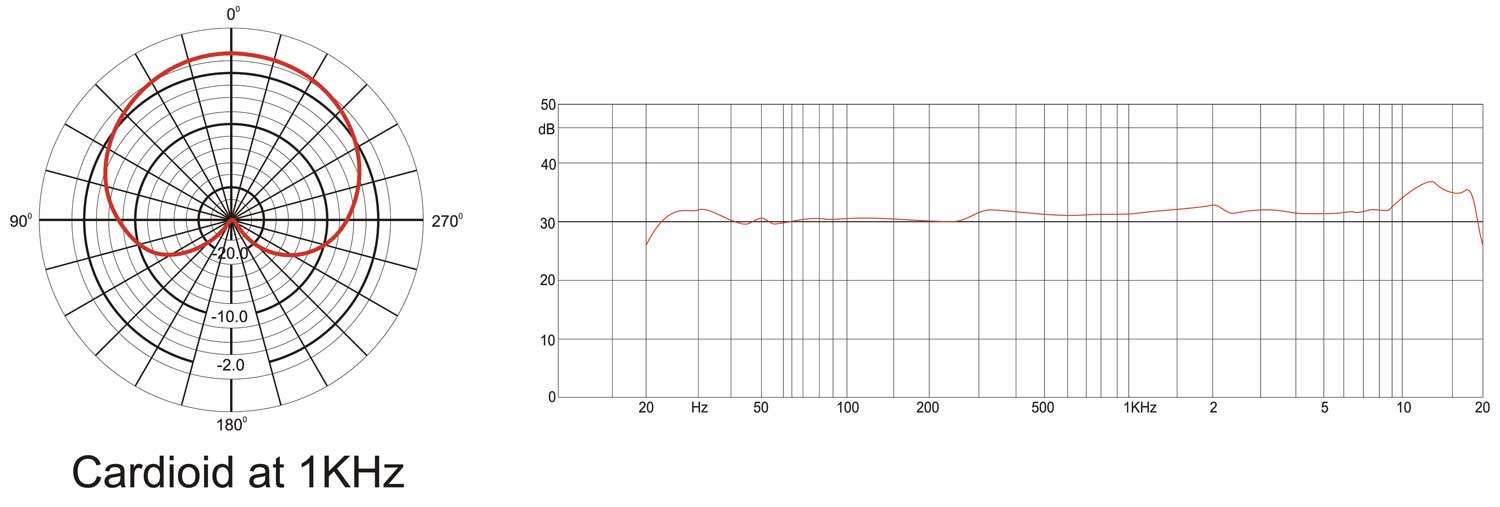
At the heart of the Fluid Audio Axis is a 34 mm gold-sputtered large diaphragm with a cardioid polar pattern.
The microphone uses discrete Class-A FET electronics together with a transformer-coupled balanced output.
Its published frequency response extends from 20 Hz to 20 kHz, equivalent noise is rated at 16 dBA and maximum acoustic SPL is 136 dB.
That combination makes Axis suitable for considerably more than vocal recording alone.
It has enough sensitivity and frequency extension for acoustic instruments and detailed sources, while its 136 dB SPL capability provides useful headroom when recording louder instruments, percussion and amplifiers.
| Microphone type | Large-diaphragm condenser |
|---|---|
| Capsule | 34 mm gold-sputtered diaphragm |
| Polar pattern | Cardioid |
| Frequency response | 20 Hz–20 kHz |
| Equivalent noise | 16 dBA |
| Maximum SPL | 136 dB SPL |
| Electronics | Discrete Class-A FET |
| Output stage | Transformer-coupled balanced output |
| Power requirement | 48 V phantom power |
What Does the Fluid Audio Axis Sound Like?
A specification sheet cannot tell you whether a microphone will actually work well in a recording session.
This is where the independent Axis reviews become particularly useful.
MusicRadar described the microphone as reasonably neutral overall, with a subtle lift in the upper frequencies. The reviewer tested Axis on percussion, drums, acoustic guitar and vocals and found it performed well across the different sources.
Acoustic guitar was described as nicely balanced, while the supplied dual-layer pop filter made it possible to work closely with the microphone when recording vocals.
Bonedo heard a more noticeable high-frequency emphasis and described the resulting character as fresh and detailed. Their test also found that Axis worked particularly well at short recording distances, retaining useful body while maintaining clear articulation.
These slightly different descriptions are not unusual in microphone reviews. Voice, instrument, distance, room acoustics and preamp all affect what a reviewer hears.
What is more important is that Axis was repeatedly found to be a useful and versatile microphone across a wide variety of real recording situations.
Professional Reviews of the Fluid Audio Axis
Axis was reviewed by several established music-production and recording publications after its introduction.
Amazona
Amazona tested Axis as Fluid Audio’s microphone debut and used it on speech, vocals, acoustic guitar, electric guitar, snare and other loud sources.
The publication concluded that Axis performed very well as a studio all-rounder and highlighted the extensive accessory package and overall price-to-performance ratio.
MusicRadar / Future Music
MusicRadar described Axis as a well-specified microphone package with a quality finish and called it a very solid entry into the microphone market for Fluid Audio.
The reviewer highlighted its reasonably neutral character, subtle high-frequency lift, effective pop filter, suspension mount, hard case and included Scale Technologies microphone cable.
Axis was tested on percussion, drums, acoustic guitar and vocals and performed well across the different sources.
Bonedo
Bonedo awarded the Fluid Audio Axis 4.5 out of 5.
The German publication praised its fresh sound, ability to work effectively at close recording distances, good detail reproduction, manufacturing quality and comprehensive accessory package.
The review also noted the microphone’s brighter tonal balance, something that can be useful for clarity and presence depending on the source.
Recording Magazine
Recording Magazine tested Axis on vocals, acoustic instruments and percussion and found it to be an unusually versatile microphone.
The reviewer highlighted its clean presentation, useful body and airy upper-frequency character and reported particularly good results on acoustic recording, vocals, congas and shakers.
The review also suggested that a pair of Axis microphones could work well for overheads, room recording, choir or piano.
What Can You Record With Axis?
One of the strongest arguments for Axis is its versatility.
Rather than being designed for one very specific recording task, it can function as an everyday condenser microphone across a wide range of sources.
Vocals
The large diaphragm, cardioid pickup pattern and detailed upper-frequency response make Axis well suited to lead vocals, backing vocals, voice-over and spoken-word recording.
Acoustic Guitar
Acoustic guitar was one of the sources specifically praised in the MusicRadar test, where the microphone delivered a nicely balanced result.
Percussion and Drums
With a maximum SPL of 136 dB, Axis has useful headroom for percussion and other louder sources.
Recording Magazine achieved particularly good results with congas and shakers and also considered the microphone suitable for overhead and room applications.
Guitar Cabinets
Its SPL capability also makes Axis a useful option in front of guitar amplifiers when the additional detail and frequency extension of a condenser microphone is desirable.
Piano, Choir and Room Recording
The combination of full-range response, cardioid pickup and detailed condenser character makes Axis suitable for piano, choir and general room recording, particularly when using two identical microphones for stereo recording.
Podcasting and Streaming
Axis is equally suitable for speech, podcasting and streaming when connected to an audio interface, mixer or microphone preamp capable of supplying 48 V phantom power.
A Complete Recording Package
Another reason Axis deserves attention is what comes in the box.
Many microphones are supplied with little more than a basic holder or pouch. Fluid Audio designed Axis as a much more complete recording package.
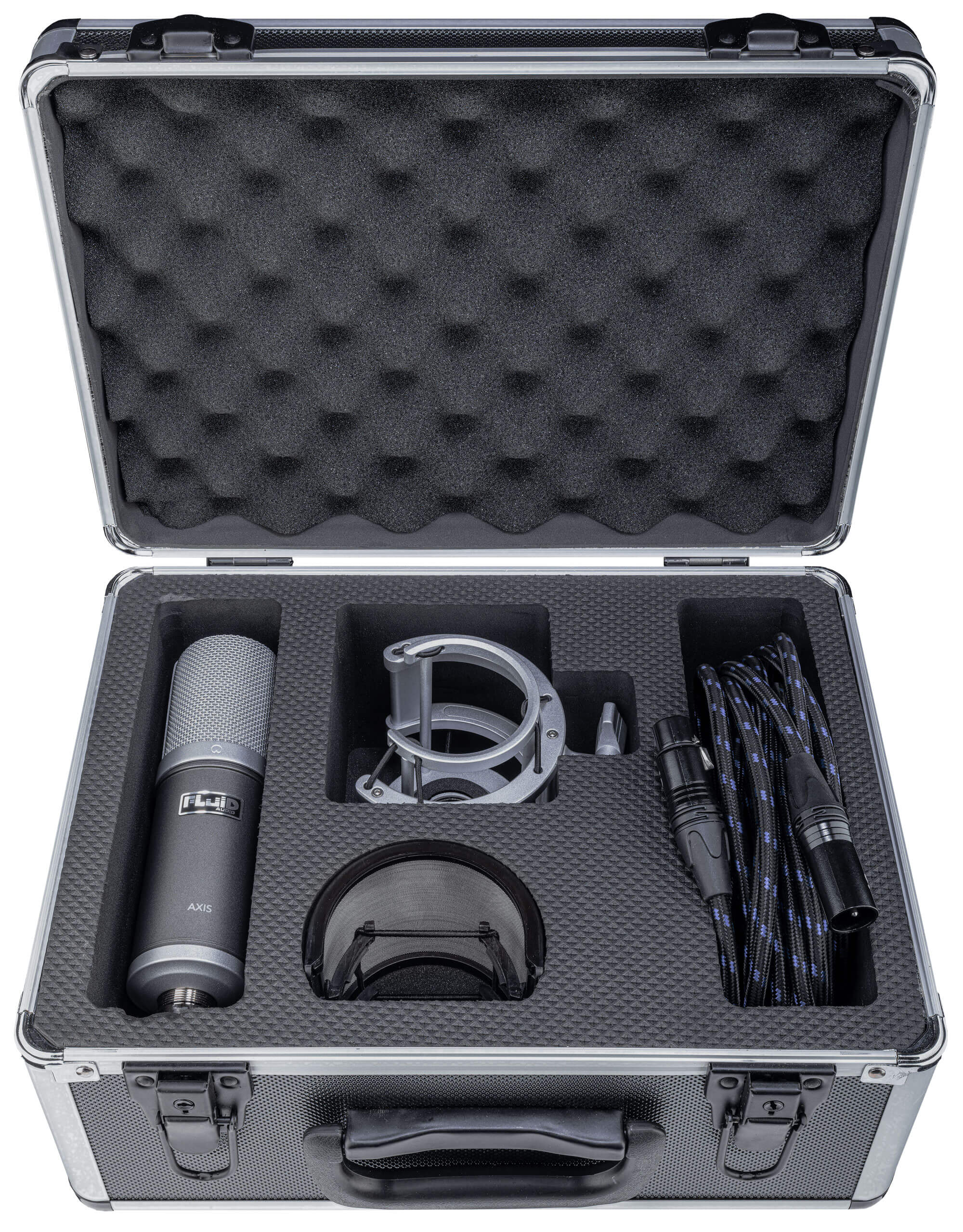
The complete package includes:
- Fluid Audio Axis large-diaphragm condenser microphone
- Professional shock mount
- Dual-layer pop filter
- Protective zip pouch
- Reinforced hard carrying case
- 5 metre Scale Technologies professional XLR microphone cable
The included 5 metre Scale Technologies XLR cable makes the package especially practical. Connect Axis to an audio interface or microphone preamp with phantom power, add a microphone stand, and the recording setup is essentially ready to use.
Fluid Audio Axis Specifications
| Microphone type | Large-diaphragm condenser studio microphone |
|---|---|
| Polar pattern | Cardioid |
| Capsule | 34 mm gold-sputtered large diaphragm |
| Frequency response | 20 Hz–20 kHz |
| Sensitivity | 12.4 mV/Pa (-38 dBV/Pa ±3 dB @ 1 kHz) |
| Output impedance | 100 Ω |
| Rated load impedance | 1000 Ω |
| Equivalent noise level | 16 dB A-weighted |
| Maximum acoustic SPL | 136 dB SPL @ 1 kHz, 1% THD into 1 kΩ load |
| Signal-to-noise ratio | 77 dB A-weighted |
| Maximum output | +11 dBu |
| Electronics | Discrete Class-A FET |
| Output design | Transformer-coupled balanced output |
| Housing | Solid brass body |
| Power requirement | 48 V ±4 V phantom power |
Why Axis Is Particularly Interesting Today
When Axis was originally reviewed, it was positioned in approximately the €250–€280 microphone category.
That context is important because the design, construction and accessory package were developed for that price range.
ScaleNordic is currently offering the Fluid Audio Axis at a special outlet price.
This places Axis in competition with many entry-level condenser microphones while retaining its 34 mm capsule, Class-A FET electronics, transformer-coupled output, shock mount, dual-layer pop filter, hard case and 5 metre XLR cable.
For somebody who needs a versatile microphone rather than several specialised microphones, that makes Axis especially interesting.
Who Is the Fluid Audio Axis For?
Axis makes particular sense for musicians and creators who want one microphone capable of handling many different jobs.
- Home recording studios
- Project studios
- Singers and songwriters
- Acoustic musicians
- Guitarists recording amplifiers
- Podcast and voice-over creators
- Streaming setups using an audio interface
- Studios looking for additional general-purpose condenser microphones
The Bottom Line
Fluid Audio may be much better known for studio monitors, but Axis shows why a product should be judged by more than the category a brand is famous for. It combines a serious large-diaphragm condenser design with useful studio versatility, a comprehensive accessory package and positive independent reviews. At the current ScaleNordic outlet price, Axis deserves another look.
Frequently Asked Questions
Is the Fluid Audio Axis a condenser microphone?
Yes. Axis is a large-diaphragm condenser microphone using a 34 mm gold-sputtered diaphragm and a cardioid polar pattern.
Does the Fluid Audio Axis require phantom power?
Yes. Axis requires 48 V phantom power from a compatible audio interface, mixer or microphone preamp.
Is the Fluid Audio Axis suitable for vocals?
Yes. Vocals are one of its primary applications. Independent reviewers also tested the microphone successfully on vocals and spoken voice.
Can the Fluid Audio Axis record acoustic guitar?
Yes. MusicRadar specifically reported a nicely balanced result when using Axis on acoustic guitar.
Can Axis handle loud instruments?
Yes. Its published maximum acoustic SPL is 136 dB, giving it useful headroom for louder sources including percussion and guitar amplifiers.
Is the Fluid Audio Axis good for podcasting?
Yes. Axis can be used for podcasting, voice-over and streaming when connected to an audio interface or other microphone input that provides 48 V phantom power.
What comes with the Fluid Audio Axis?
Axis includes a professional shock mount, dual-layer pop filter, protective pouch, reinforced hard case and a 5 metre Scale Technologies professional XLR microphone cable.
Has the Fluid Audio Axis received professional reviews?
Yes. Axis has been reviewed by Amazona, MusicRadar, Bonedo and Recording Magazine. The reviews tested the microphone on a variety of vocal and instrumental sources and were generally positive about its versatility, sound and accessory package.
Why is Fluid Audio better known for studio monitors than microphones?
Fluid Audio built much of its reputation around loudspeaker and studio-monitor design. Axis was the company’s first studio microphone, so it entered a market where many competing manufacturers already had long-established microphone ranges.
Discover the Fluid Audio Axis
The Fluid Audio Axis is currently available from ScaleNordic at a special outlet price.
View Fluid Audio Axis at ScaleNordic →
Looking for more professional audio equipment at reduced prices? Explore ScaleNordic Outlet & Clearance Sales →