

Scale Touring Grade Cables: Professional Quality Without the Big-Brand Price
There are plenty of professional audio cables on the market.
Some carry famous names. Some come with impressive packaging. And some cost several times more than others that, from the outside, appear to do exactly the same job.
When we developed the Scale Touring Grade Series, we started from a different direction.
We did not ask how cheaply we could manufacture a professional cable.
We asked how good we could make one.
Build the kind of cable we would want to use ourselves on stage and in the studio – then keep the commercial structure lean enough that the customer does not have to pay a large premium simply for the name printed on the connector.
It took us around six years to find the right cable factory
The Scale Touring Grade Series did not begin with a ready-made cable selected from a catalogue.
Finding the manufacturing partner we wanted took approximately six years.
During that period, we received and evaluated samples from around ten different cable factories.
Some looked perfectly acceptable in their specifications. Some looked good when they arrived. But once we handled them, coiled them, connected them and considered how they would behave after repeated professional use, they simply did not meet the standard we wanted.
So we rejected them and continued looking.
We kept searching until we found a manufacturer capable of producing a cable we genuinely wanted to put our own name on.
Developed by people who have worked with cables for decades
The lead developers behind the Scale Touring Grade cable range were Robert Storm Olsen and Frode Skinstad.
Both brought more than 30 years of practical experience from live sound and studio work into the development process.
After that many years around stages, studios, musicians, sound systems and touring equipment, you learn that a professional cable is about much more than whether it passes a signal when it is brand new.
You notice how it behaves when it is coiled. How naturally it lays across a stage. How easily it twists. How the connectors feel after repeated use. How quickly the cable can be deployed during setup. And how frustrating a cable becomes when it starts fighting against the person using it.
Those practical details became a major part of the Touring Grade development process.
Years of experience with VOVOX and Klotz gave us a reference point
Our experience with premium professional cables did not begin when we decided to develop Scale.
For approximately 15 years, we were the Norwegian distributor for VOVOX, a highly regarded Swiss cable manufacturer with a strong presence in professional studio and live audio.
Through Procom Music AS, we were also at one point the largest Klotz retailer in Norway.
That gave us many years of direct experience with established high-end professional cable products before the Scale Touring Grade Series was created.
We knew how premium cables were constructed, how they behaved after repeated use, what professional customers expected from them and which practical details separated a good cable from an ordinary one.
Our goal was not to copy either brand. We wanted to develop a Scale cable that could comfortably meet the professional standards we had come to expect from the high-end cable products we already knew so well.
Throughout the development process, Scale prototypes and production samples were repeatedly compared with cables from the higher-end Klotz and VOVOX ranges.
We compared construction, flexibility, handling, connectors and practical behaviour in the kinds of live and studio environments we had worked in for decades.
The standard we set for ourselves was straightforward:
If we were going to put the Scale name on the cable, we wanted it to meet the level of quality we had come to expect from the professional reference cables we had worked with for years.
That experience also made it easier to reject samples that looked acceptable on paper but simply did not feel right in practical use.
VOVOX and Klotz were reference products for us during development. This does not imply that those products are identical to Scale cables or that they are manufactured in the same factory.
We also asked the people who actually use cables every day
We did not rely only on our own experience.
Over many years, we also spoke with people working professionally in the live sound market and asked them what they actually wanted from a better professional cable.
The answers were remarkably consistent.
- A cable that remains flexible.
- A cable that is easy to coil and deploy repeatedly.
- A cable that lays naturally instead of constantly trying to curl back into shape.
- Connectors that feel mechanically solid.
- Good shielding for demanding professional environments.
- Reliable construction for repeated setup, teardown and transport.
- A cable that is easy to work with night after night.
- A cable reliable enough that you do not have to think about it during a job.
Those conversations became part of the specification behind the Touring Grade Series.
Built from the live market backwards
Touring Grade was not designed by starting with a target retail price and working backwards until the cable became cheap enough.
We started with the requirements.
What should the cable feel like? How should it coil? How should it behave on a stage? What kind of shielding did we want? Which connectors would we trust? How should the terminations be assembled?
Only after those questions had been answered did we have the product we wanted.
Once we found the factory, we chose the best specification available to us
Finding the right factory was only the first step.
The manufacturer could produce cables, connectors and complete assemblies at different quality levels and different price points.
We deliberately chose the highest-grade cable and connector options available to us for the Touring Grade Series.
We were trying to build the best cable it could make for our application.
There were less expensive cable constructions and connector options available.
We deliberately did not choose them.
Our priority was the quality of the cable itself: conductor material, shielding, physical construction, flexibility, connectors, soldering and long-term usability.
The result became the Scale Touring Grade Series.
The same factory can make very different cables
The professional cable factory we selected also manufactures products for major international audio brands.
But there is an important point here:
Using the same factory does not mean every customer orders the same cable.
A professional factory can manufacture many different cable constructions, connector qualities and specifications depending on what each customer requests and what price target they are trying to achieve.
During our work with the manufacturer, we saw that some much better-known brands using the same production facility had selected more cost-conscious cable or connector specifications than the ones we chose for Scale Touring Grade.
That was their commercial decision.
We made a different one.
We wanted the quality in the conductors, shielding, connectors, solder joints and physical construction – not simply in the logo printed on the cable.
The signal does not know what logo is printed on the cable
A cable cannot read the brand name on its connector.
The audio signal only encounters the physical cable between the two pieces of equipment.
It sees the conductors, shielding, connectors, solder joints and electrical construction.
This is why we have never believed that a professional cable automatically becomes better simply because a globally recognised brand is printed on it.
A famous brand can have enormous value in distribution, marketing, availability and customer confidence.
But those costs do not automatically improve the conductor inside the cable.
We are not claiming that a cable magically changes your sound
There is plenty of exaggerated marketing in the cable business.
That has never been our approach.
We are not going to tell you that changing to a Scale cable will suddenly transform a good microphone, guitar or sound system into something completely different.
A professional cable has a much more practical job.
It should carry the signal reliably, provide effective shielding, make solid electrical contact, withstand repeated professional use and remain easy to handle.
It works, it lays properly, it coils easily, the connectors remain reliable and it does its job night after night.
That is what we designed Touring Grade to do.
We tested conventional 4-core cables – but they were too thick and stiff
During development, we tested a number of conventional 4-core cable constructions.
Many of them performed very well electrically.
But for live use, we kept encountering the same problem.
They were simply too thick, too stiff and too cumbersome to handle.
That matters when a cable is being coiled, deployed, packed and transported every day.
A cable can have excellent electrical specifications and still be unpleasant to work with on a stage.
We wanted the advantages we liked from 4-core designs, but we did not want to end up with a cable that was unnecessarily heavy or difficult to handle.
The factory proposed a different solution
The factory we finally selected understood what we were trying to achieve and suggested a different construction.
Instead of simply using a conventional thick 4-core cable, the design uses two signal conductors together with two additional filled structural elements.
This creates a stable internal cable geometry while allowing the finished cable to remain considerably more flexible and easier to work with.
That construction became what we call the 4-Core Twinning Process.
Retain the performance and mechanical advantages we were looking for from a 4-core-style construction while making the finished cable significantly more flexible and practical for real-world live and studio use.
For us, that was the better solution.
A professional cable should not only perform well electrically.
It should also behave like a professional cable when someone actually has to work with it.
This includes our microphone cables, balanced XLR/TRS cables and balanced TRS cables.
OFC conductors, substantial shielding and a flexible 6.5 mm construction
For the balanced Touring Grade cables, we selected oxygen-free copper conductors together with substantial OFC spiral shielding.
The overall cable construction is approximately 6.5 mm in diameter and was selected to combine electrical performance, mechanical durability and practical flexibility.
That combination matters.
A cable installed permanently behind a rack has a very different life from one that is coiled, placed into a case, transported, uncoiled and laid across a stage every night.
Touring Grade was developed with the second type of life in mind.

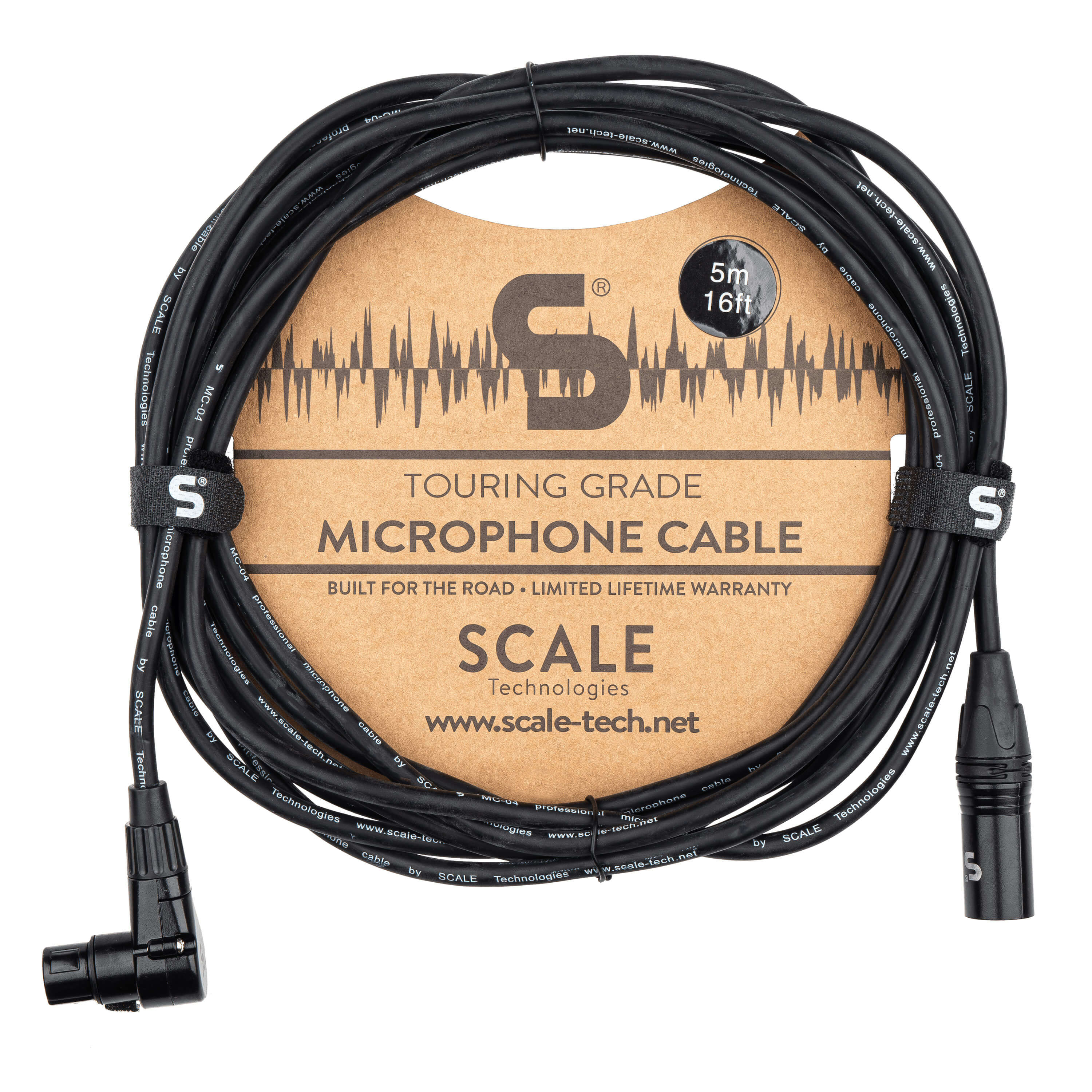


A cable that behaves like a professional cable should
One of the things we paid particular attention to during development was cable memory.
Many inexpensive cables can look perfectly acceptable when they are new, but after being stored or coiled they start to fight against you.
They form persistent loops, twists and kinks. You lay the cable on the floor and it wants to return to the shape it had while stored.
We did not want that behaviour in Touring Grade.
The cable construction we selected was specifically chosen to remain flexible, resist persistent cable memory and lay naturally during practical use.
During a live setup, studio session or repeated installation, a cable that naturally goes where you place it is faster, easier and much more pleasant to work with.
We paid the same attention to the connectors
A high-quality cable with a poor connector is still a poor professional cable.
That is why we did not stop once we had selected the cable itself.
We chose the highest-grade connector options available to us from the manufacturer.
The instrument and TRS models use custom connectors with gold-plated contact surfaces, while the XLR cables use our custom professional XLR connector construction.


Every assembled Touring Grade cable is hand-soldered
Choosing good cable and connectors is only part of the job.
The way those components are assembled matters just as much.
Every assembled Scale Touring Grade cable is hand-soldered.
We chose this approach because professional cables are mechanical products as much as they are electrical products. The connector has to survive repeated insertion, removal, handling, transport and strain without the termination becoming the weak point.
Instrument cables need their own construction
An instrument cable has a different electrical job from a balanced microphone or line cable, so we do not simply use the same internal construction for everything.
The Touring Grade instrument range uses OFC conductor material, substantial spiral shielding and custom hand-soldered jack connectors with gold-plated contact surfaces.
The goal is the same as with the balanced range: reliable professional performance combined with a cable that remains practical and pleasant to use.


Two cable straps with every assembled cable
Small details matter when equipment is used professionally.
Every assembled Scale Touring Grade cable is supplied with two reusable cable straps.
We wanted the cables to arrive ready to work and remain easy to organise during storage and transport.
One strap can remain attached to the cable while the second gives additional flexibility when the cable is coiled, stored or secured together with other equipment.
It may sound like a small detail, but it is exactly the kind of detail that becomes useful when you work with cables every day.
Paper-based packaging instead of unnecessary plastic
We also thought carefully about the packaging.
The cable is the product that should remain in use for many years. The packaging is something the customer needs only until the cable is opened.
For that reason, we chose paper-based packaging for the Touring Grade range rather than surrounding the cable with unnecessary amounts of disposable plastic.
Individually tested before leaving the factory
Good components are only valuable when the finished product is assembled correctly.
That is why every assembled Touring Grade cable is individually tested before shipment from factory.
The intention from the beginning was to create cables designed for repeated professional use rather than disposable accessories that would simply be replaced when they failed.
Lifetime warranty
We also back the assembled Scale Touring Grade cables with a lifetime warranty.
That is not a decision we take lightly.
We are willing to offer a lifetime warranty because of the confidence we have in the cable construction, the connectors, the hand-soldered assembly and the manufacturing quality.
The factory shares that confidence in the product it manufactures for us.
That is how confident we are in the Touring Grade construction.
From Scandinavia to the rest of Europe
Scale Touring Grade may still be relatively unknown to many musicians and engineers across continental Europe.
But the cables themselves are not new.
For years, our main market was Scandinavia.
At the strongest point of the cable business, we were selling approximately 4,000 Scale cables per month.
Thousands of Scale cables were going into Scandinavian studios, live rigs and instrument setups every month.
Customers there had time to become familiar with the products and the Scale name.
Today the situation is different.
ScaleNordic has moved its operation and inventory from Norway to Spain, and much of the stock is now being introduced to customers in European markets where the Scale cable brand has little or no history.
The cable did not suddenly become different when the stock moved south.
What changed was the market.
In Scandinavia, many customers already knew the product.
In the rest of Europe, we have to tell the story again.
Why can Scale Touring Grade cost so much less than some famous brands?
If we selected such high-grade cable and connector options, it is reasonable to ask why Touring Grade can still be sold at prices considerably below many established international cable brands.
The answer is not that we asked the factory to make a cheaper cable.
We did the opposite.
The difference is largely in the commercial structure surrounding the product.
Large international brands may support global marketing organisations, multiple distribution layers, regional distributors, dealer networks and the cost of maintaining a globally recognised brand.
All of those things cost money.
Scale has always operated with a much leaner structure.
It does not automatically add more copper, better shielding, a better connector or better soldering.
That is why comparable professional cables from major international brands can sometimes cost considerably more.
Our approach was to put as much of the product value as possible into the cable itself.
The balanced Touring Grade cables currently in stock
Our current balanced Touring Grade range covers the most common professional microphone and line connections.
- Scale TGM-FM – XLR female to XLR male microphone cable.
- Scale TGM-AFM – XLR cable with angled XLR connector.
- Scale TGM-TRM – balanced TRS to male XLR cable.
- Scale TGB-TRS – balanced TRS to TRS cable.
All of these balanced Touring Grade models use the 4-Core Twinning Process.
Touring Grade instrument cables currently in stock
The instrument range provides three practical connector configurations using the same Touring Grade philosophy.
- Scale TGI-JJ – straight jack to straight jack.
- Scale TGI-JAJ – straight jack to angled jack.
- Scale TGI-AJAJ – angled jack to angled jack.
Stereo and connection cables currently in stock
Touring Grade was never limited to microphone and guitar cables. We also developed a range of practical connection cables using the same focus on component quality and professional construction.


- Scale TGS-AJJ – TS jack / angled TS jack dual mono cable.
- Scale TGS-MJJ – minijack to dual TS jack stereo cable.
- Scale TGS-MJM – minijack to XLR male stereo cable.
- Scale TGS-MJP – minijack to RCA stereo cable.
- Scale TGS-PJ – TS jack to RCA stereo cable.
- Scale TGS-PM – XLR male to RCA stereo cable.
- Scale TGS-PP – RCA to RCA stereo cable.
For people who prefer to make their own cables
We also have Touring Grade cable available on 100 metre reels.


- Scale Touring Grade Microphone Cable – 100 m – balanced microphone cable with 4-Core Twinning Process.
- Scale Touring Grade Instrument Cable – 100 m – professional instrument cable for custom cable building and installations.
Which Scale Touring Grade cable do you need?
- Microphone, mixer or stagebox: choose one of our balanced XLR Touring Grade cables.
- Balanced line connections: choose the appropriate XLR/TRS or TRS/TRS Touring Grade model.
- Guitar, bass, keyboard or another unbalanced instrument output: choose a Touring Grade instrument cable.
- Playback devices and stereo connections: choose from the Touring Grade stereo and connection cable range.
- Custom installations or your own cable building: choose the appropriate 100 metre Touring Grade bulk cable.
Professional does not have to mean expensive
There is a common assumption in professional audio that price and quality must always rise together.
Sometimes they do.
Better materials and better manufacturing obviously cost money.
But branding, distribution and marketing also cost money – and those costs can become a surprisingly large part of the final retail price.
That is why we think the more useful question is not:
“Which cable has the most famous logo?”
It is:
“What am I actually getting inside the cable?”
High-grade cable construction, OFC conductors, substantial shielding, the best connector options available to us, hand soldering, the 4-Core Twinning Process on balanced cables, practical cable handling, individual factory testing and a lifetime warranty.
Frequently asked questions about Scale Touring Grade cables
Who developed the Scale Touring Grade cables?
Robert Storm Olsen and Frode Skinstad were the lead developers behind the Scale Touring Grade cable range. Both brought more than 30 years of experience from live sound and studio work into the development process.
What experience did Scale have with premium cables before developing Touring Grade?
For approximately 15 years, we were the Norwegian distributor for VOVOX, and through Procom Music AS we were at one point the largest Klotz retailer in Norway. This gave us extensive practical experience with established professional cable products before developing Scale Touring Grade.
Were VOVOX and Klotz used as references during development?
Yes. Higher-end cables from VOVOX and Klotz were repeatedly used as internal reference products while Scale prototypes and production samples were evaluated. The objective was not to copy those products, but to ensure that our own cables met the professional standards we had come to expect from the premium cable ranges we already knew well.
Are Scale Touring Grade cables made in the same factory as major audio brands?
Yes. The professional cable manufacturer we selected also produces cables for major international audio brands. However, each customer can specify different cable constructions, connectors, materials and price levels. Using the same factory does not mean every brand receives the same product.
Did Scale choose cheaper specifications to keep the price down?
No. When we developed Touring Grade, we deliberately selected the highest-grade cable and connector options available to us from the manufacturer. Less expensive alternatives were available, but our objective was to build the best cable we could for professional applications rather than minimise manufacturing cost.
Why did it take so long to develop the series?
It took approximately six years to find the manufacturing partner we wanted. During that process, we evaluated samples from around ten different factories and rejected the ones that did not meet our requirements for construction, flexibility, connectors and practical professional use.
Why did Scale not use a conventional 4-core cable?
We tested a number of conventional 4-core cable constructions during development. Many performed very well electrically, but they were too thick and stiff for the kind of live use we had in mind. The factory we eventually selected proposed the construction that became our 4-Core Twinning Process, giving us the characteristics we wanted while keeping the finished cable substantially more flexible and easier to handle.
What is the 4-Core Twinning Process?
The 4-Core Twinning Process is the internal construction used in our balanced Touring Grade cables. It uses two signal conductors together with two additional filled structural elements, creating a more stable internal geometry while allowing the finished cable to remain flexible and practical for professional use.
Which Touring Grade cables use the 4-Core Twinning Process?
All balanced cables in the Touring Grade range use the 4-Core Twinning Process, including the XLR microphone cables, balanced XLR/TRS cables and balanced TRS cables.
Are the Touring Grade cables hand-soldered?
Yes. Every assembled Scale Touring Grade cable is hand-soldered.
Are the finished cables tested?
Yes. Every assembled Touring Grade cable is individually tested before shipment from factory.
Do Scale Touring Grade cables have a lifetime warranty?
Yes. The assembled Scale Touring Grade cables are backed by a lifetime warranty.
Do the assembled cables include cable straps?
Yes. Every assembled Touring Grade cable is supplied with two reusable cable straps.
Are the cables designed to resist twisting and cable memory?
Yes. The cable construction was specifically selected for flexibility and practical handling, with the aim of resisting the persistent curling, kinking and cable memory often associated with less expensive cable constructions.
Why use paper-based packaging?
We wanted to avoid unnecessary disposable plastic around a product designed to remain in service for many years. The paper-based packaging protects and presents the cable while keeping the packaging concept relatively simple.
Were Scale cables already sold professionally before ScaleNordic moved to Spain?
Yes. Scale cables were sold primarily in Scandinavia for many years. At the strongest point of the business, approximately 4,000 Scale cables per month were being sold in the Scandinavian market.
Will a Scale Touring Grade cable change the sound of my system?
We do not market Touring Grade with claims that a cable will magically transform a microphone, instrument or sound system. Our objective is reliable signal transmission, effective shielding, solid electrical connections, professional durability and practical handling.
Our final advice
Do not buy a Scale Touring Grade cable simply because it costs less than some famous alternatives.
Look at what you are actually getting.
Look at the cable construction. Look at the conductor material. Look at the shielding. Look at the connectors. Look at how the cable is assembled, how it handles and how it is tested.
Then compare it with cables costing considerably more.
It only knows the cable that is actually carrying it.
It took us around six years, samples from approximately ten factories, more than 30 years of live and studio experience from each of the lead developers, extensive experience with premium VOVOX and Klotz cables, and years of feedback from people working in the professional live market before we were satisfied with the Touring Grade Series.
We think that effort is worth considerably more than the name printed on the connector.
Our current Touring Grade stock includes professional microphone, balanced, instrument, stereo and bulk cable options in a range of useful lengths and connector configurations.