



Telefunken M60: Single Microphone or Stereo Pair for Acoustic Recording?
Choose a single Telefunken M60 Cardioid when you need one focused instrument track. Choose the M60 Cardioid Stereo Set when the width and placement of an acoustic performance are part of the recording you want to capture. Two microphones create more options, but also require two recording channels and more care with placement.
Single microphone or stereo set?
For an acoustic guitar inside a busy arrangement, start by considering one M60. For a solo instrument, piano or stereo overhead recording where a wider perspective matters, consider the matched Cardioid Stereo Set. Decide from the role of the recording, not simply from the number of microphones.
| Package | What you get | Checked price |
|---|---|---|
| M60 Cardioid | One M60 amplifier and TK60 cardioid capsule | €699.99 |
| M60 Cardioid Stereo Set | Two M60 amplifiers and matched TK60 cardioid capsules | €1,325.99 |
Prices checked on 16 September 2026 for Spain, in EUR. The listed products were available at that check. Prices and availability can change; confirm the selected model, destination and delivery charges before ordering.
What the M60 Cardioid is designed to capture

The M60 is a small-diaphragm FET condenser microphone. The Cardioid package pairs its amplifier body with a TK60 capsule. The listing highlights transient response and applications such as acoustic guitar, percussion and drum overheads, making it a relevant option when you want to capture the attack and detail of an instrument.
It uses phantom power; Telefunken specifies +48V. Plan for a suitable microphone input on your audio interface or preamp. For the stereo set, you need two microphone inputs to record the two signals separately. A second microphone cannot create a two-channel recording through a single input by itself.
Why a single M60 can be enough
One microphone gives you one placement to refine. On an acoustic guitar that supports a vocal or sits between other instruments, a focused mono track can be easier to position in the mix than a wide stereo recording. You can pan it where the arrangement needs it and preserve space for other parts.
Begin by listening to the instrument in the room, then move the microphone to find a useful balance of body and articulation. Record short examples and compare them at a similar level. If the track works with one microphone, adding another is optional rather than a requirement for a professional result.
A single M60 also keeps the recording chain smaller: one preamp channel, one mount and one cable path. It is the practical starting point if your interface has one suitable microphone input or if you mainly record individual parts by overdubbing.
When the Cardioid Stereo Set earns its place
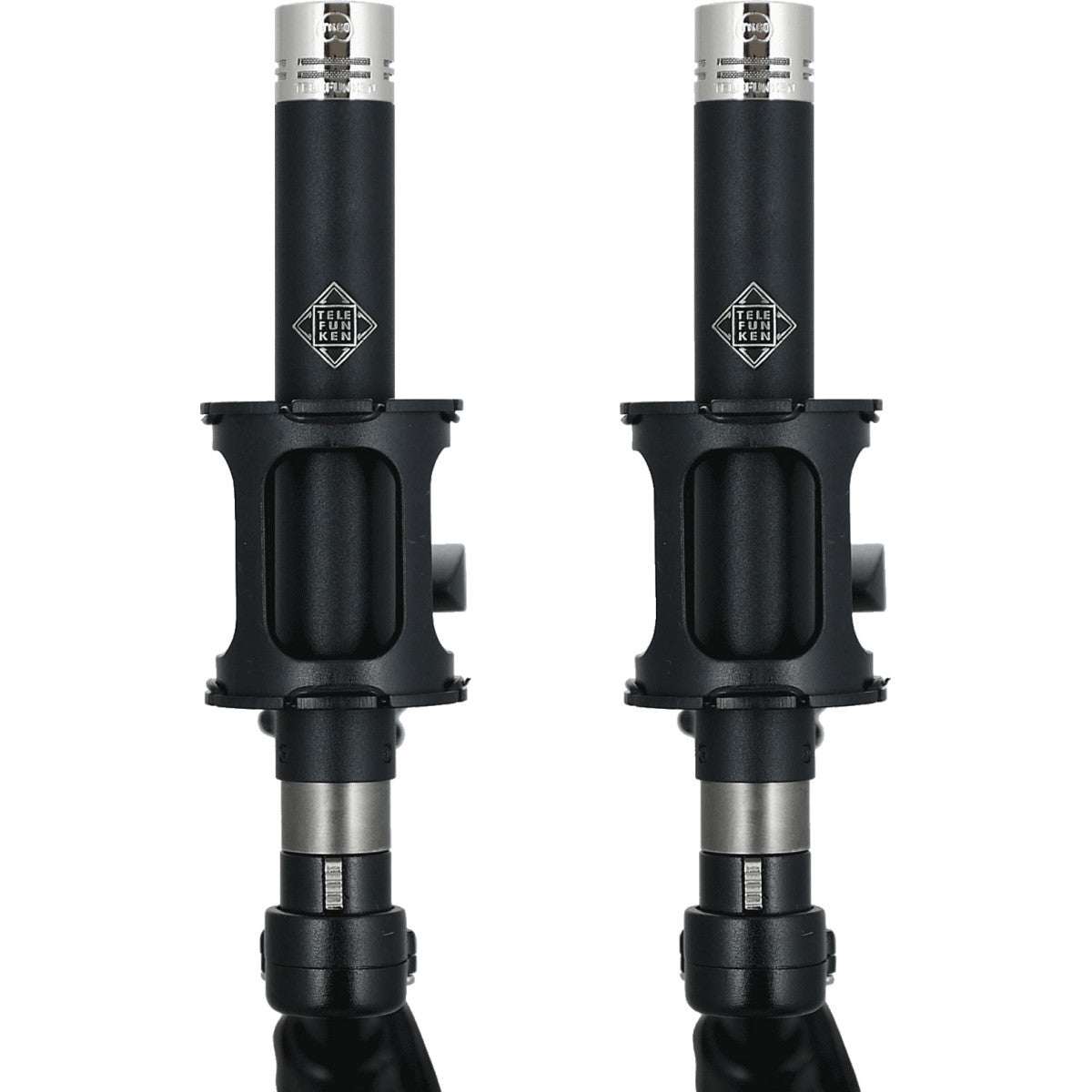
A stereo pair becomes useful when the spatial presentation is part of the performance: the spread of a piano, the image of an acoustic ensemble or the relationship between parts of a drum kit. The matched TK60 capsules provide a specified pair rather than two unrelated capsule choices.
Matching is useful, but it does not replace placement. The two channels still need appropriate gain settings, sensible positioning and a check in mono. Listen for changes in body or tone when the signals are combined; a wide headphone image is not the only measure of a successful recording.
For a first stereo setup, a coincident approach such as XY is worth learning. Shure’s stereo-miking guide explains the main approaches. Choose a technique deliberately and test the result rather than placing two microphones at random and panning them apart.
Compare the complete package
The single Cardioid listing includes a 5 m SGMC-5R XLR cable with a right-angle female connector, an M761 elastic shock mount, a foam windscreen and a ZC61 zipper case. The Cardioid Stereo Set lists two cables, two shock mounts and two windscreens in a ZC62 dual-microphone case.
At the checked prices, two individual M60 Cardioid packages total €1,399.98. The stereo set is €1,325.99, a difference of €73.99. These are different packages: the stereo set supplies matched capsules and a shared case, while two singles provide individual cases. Compare what you need, not only the number of microphone bodies.
Cardioid is not the same package as Master Set
The M60 system supports interchangeable TK6x capsules, but the Cardioid packages compared here include TK60 cardioid capsules. That does not mean omni and hypercardioid capsules are in the box. Check the exact package name and included items whenever comparing prices.
A practical starting point for acoustic guitar
For a first single-microphone test, aim toward the area where the neck meets the body rather than automatically pointing straight into the sound hole. Record a short passage, then compare a position aimed farther toward the body and one aimed farther along the neck. Listen for the balance of low-end weight, pick attack and string noise. These are starting experiments; the instrument and playing style determine which position works.
Use the same passage and change one aspect of placement at a time. If you move the stand, rotate the microphone and ask the player to change technique together, the next take tells you little about which adjustment helped. The practical value of one M60 is that it keeps this process manageable while you learn the sound of your room and instrument.
Shure’s guitar-miking guidance discusses the effect of small placement changes. Once you find a promising position, play the part against the rest of the song. A rich solo guitar sound may need too much space in a dense arrangement; the position with less low-end weight may be the more useful track.
Choose a stereo technique before choosing two positions
XY: learn one coherent setup first
XY uses two directional microphones angled apart with their capsules as close together as practical. It creates the stereo image largely through differences in level between the channels. The M60 Cardioid Stereo Set provides the two cardioid microphones needed to explore that approach; you still need appropriate stands or mounting hardware and two recording channels.
Place the pair as a unit, then evaluate the stereo image and combined mono sound. Move the pair deliberately rather than independently chasing a pleasing tone from each microphone. A technique is a relationship between the microphones and the source, not simply two attractive solo recordings.
Spaced positions: more variables to manage
Separating the microphones introduces arrival-time differences as well as level differences. This can create a useful sense of spread, but the combined sound needs careful checking. Listen in mono for an unexpected loss of body or an altered tone, and revise the positions if necessary. A matched capsule pair cannot cancel the effects of inappropriate spacing.
For your first sessions, choose one technique and document it. Record the positions, channel assignments and approximate gain settings, and keep a short reference take. That gives you a starting point for the next recording instead of rebuilding an unfamiliar stereo setup every time.
Using the pair on piano or overheads
For piano, decide whether you want a listener’s perspective of the instrument or a closer view of different areas. Those are different creative goals and lead to different positions. Check that the image feels stable through the passage, not just on a single chord, and listen to low and high notes before settling on a setup. The room and instrument remain central to the result.
For drum overheads, listen to the kit as a whole. Make sure the central elements sit where you intend in the stereo image, and check the overheads together with any close microphones. A pair that sounds attractive alone can interact differently with the rest of the drum channels. Include loud sections in the level check and leave headroom at the interface.
Two inputs and two tracks: the practical requirements
Check that your interface has two microphone preamp inputs, not simply two sockets of different types. Confirm its phantom-power controls and follow the equipment instructions for connecting the M60s. Record the microphones onto separate tracks or a correctly configured stereo track so the channels remain identifiable during mixing.
For a symmetrical stereo setup, begin with comparable input gain, then listen and inspect the recordings rather than relying only on matching knob positions. Label left and right at the session stage. If you use the microphones for two different sources instead, set each input for its own source; buying a stereo set does not require using identical settings forever.
Buy one now or the matched set now?
Choose the single M60 when the immediate job is clearly mono, the interface has only one suitable input or you want to learn placement before adding stereo variables. Buying a second single later remains an option, but it should not be described as obtaining the factory-specified matched set.
Choose the Cardioid Stereo Set when you already have a two-channel plan and the supporting equipment. At the checked prices it costs €626 more than one single package and €73.99 less than two singles. Those comparisons answer different questions: the first is the additional budget needed today; the second compares two ways of buying two microphones. Decide which comparison reflects the recording you actually intend to make.
Frequently asked questions
Can I use one microphone from the stereo set on its own?
Yes. The set contains two microphones; it is not one combined stereo-only device. You can use one for a mono recording when that suits the session.
Is stereo always better for acoustic guitar?
No. A solo arrangement may benefit from a wider image, while a dense mix may need a focused mono part. Decide what the guitar should contribute to the finished recording.
Are two separately purchased M60s a matched set?
Do not assume so. The Cardioid Stereo Set explicitly lists matched capsules. Two separate units may be usable together, but that is different from purchasing a specified matched set.
Build around the recordings you make
Choose the single M60 Cardioid for one-channel instrument work, or explore the Cardioid Stereo Set for planned two-channel recording.
Package details checked against ScaleNordic listings and the Telefunken M60 FET / SDC manual. This guide explains documented options and recording workflow; it does not claim an original microphone test.