



Best XLR Microphone Cables Under €30: Studio & Live Picks
A good microphone cable starts with the right connectors, enough length and a construction that suits your setup. You do not have to use the whole €30 budget: the three Scale cables below each cost less than €15 in the 5 m version at the time of writing.
The quick answer
Choose the Scale TGM-FM for the lowest-priced 5 m option in this shortlist, the Scale SGM-FM if you prefer a woven outer jacket, or the Scale TGM-AFM when an angled XLR connector suits the space around your equipment.
This guide compares three ready-made cables from the ScaleNordic microphone cable range. Our recommendations are based on their listed construction, connector format, available lengths and current prices—not a hands-on listening or durability test, or a ranking of every cable on the market.
XLR microphone cables under €30: at a glance
Compare the same length first. A 1 m starting price can look attractive, but it is not a useful comparison if you need a 5 m cable.
| Cable | Choose it for | 5 m price |
|---|---|---|
| Scale TGM-FM | Value and a wider choice of lengths | €12.59 |
| Scale SGM-FM | A woven outer jacket | €14.39 |
| Scale TGM-AFM | An angled connection | €14.39 |
Prices and availability checked on 15 September 2026 for Spain, in EUR. All three 5 m variants were available at that check. Prices can change, and other markets may differ. Check your selected length and delivery charges on the product page and at checkout.
1. Scale TGM-FM: our value pick for everyday setups

The Scale TGM-FM makes sense when you want a straightforward XLR microphone cable and would rather spend the remaining budget elsewhere. At €12.59 for 5 m, it is the least expensive like-for-like choice here.
Its listed construction includes a 6.5 mm outer jacket, hand-soldered custom XLR/XLR connectors, oxygen-free copper conductors and spiral shielding. It is available in 1 m, 2.5 m, 5 m, 7.5 m, 10 m and 15 m lengths, giving you more routing options than the other two models.
Our take: start here for a rehearsal microphone, a home recording setup or a live vocal position where straight connectors fit comfortably. Choose the length by measuring the actual cable route; “Touring Grade” is the product range name, not a reason to buy more cable than you need.
Consider another option if: a straight connector protrudes into an awkward space, or you specifically want the SGM-FM's woven finish.
View the Scale TGM-FM and choose your length →
2. Scale SGM-FM: for a woven-jacket studio cable
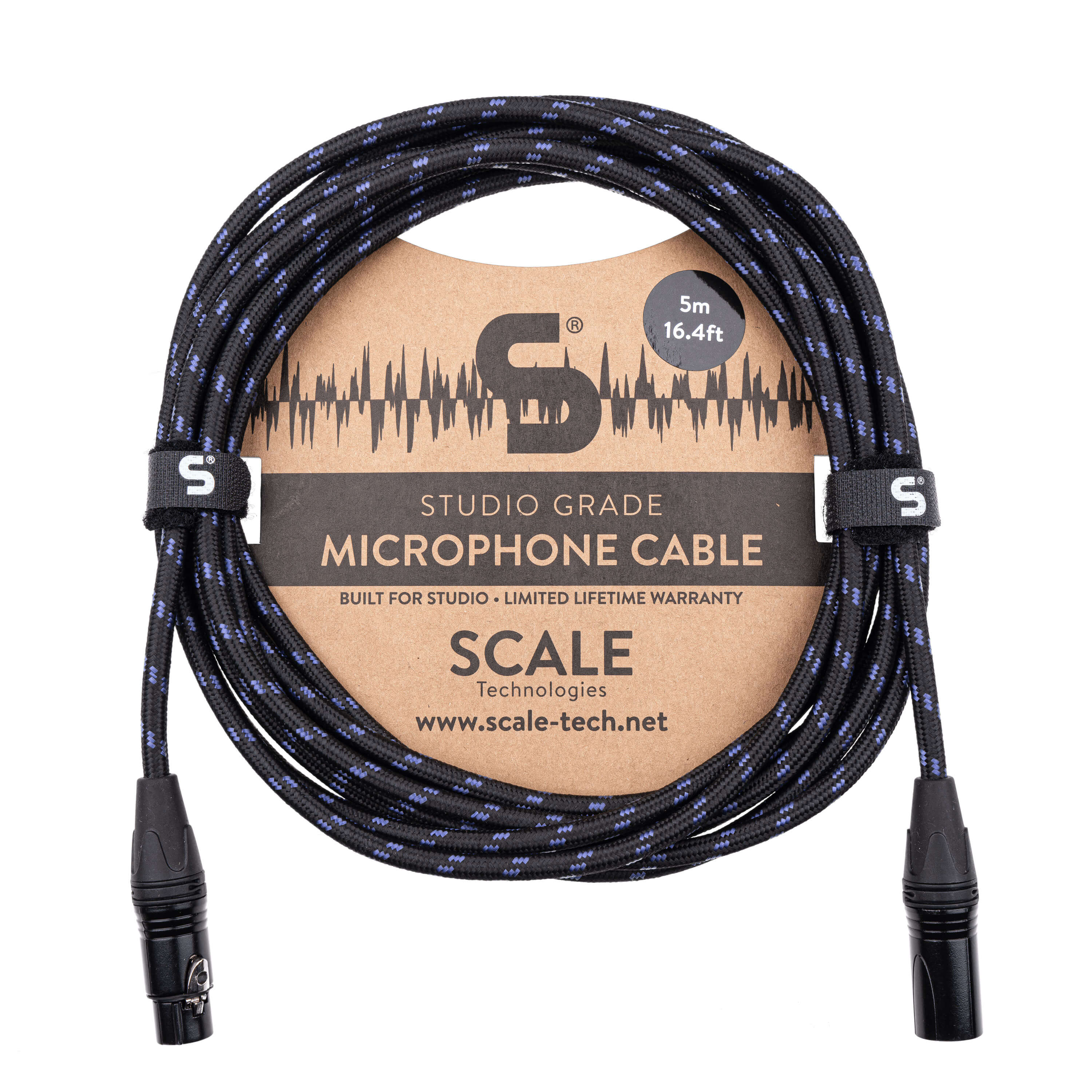
The Scale SGM-FM is the option to consider if a woven outer finish is part of what you want from your studio cabling. Its listed 7.4 mm jacket is wider than the TGM-FM's 6.5 mm jacket. The 5 m version costs €14.39.
It has hand-soldered custom XLR/XLR connectors, oxygen-free copper conductors and spiral shielding. The product listing also includes two cable straps. Lengths run from 1 m to 10 m, with 2.5 m, 5 m and 7.5 m options between them.
Our take: choose it for a microphone position where you prefer a woven jacket and can route the cable without a sharp bend. The €1.80 difference from the 5 m TGM-FM buys a different outer construction; we are not claiming a measured improvement in sound quality.
Consider another option if: your priority is the lowest price in this comparison, you need 15 m, or the connection calls for an angled plug.
View the Scale SGM-FM and choose your length →
3. Scale TGM-AFM: when an angled XLR fits better
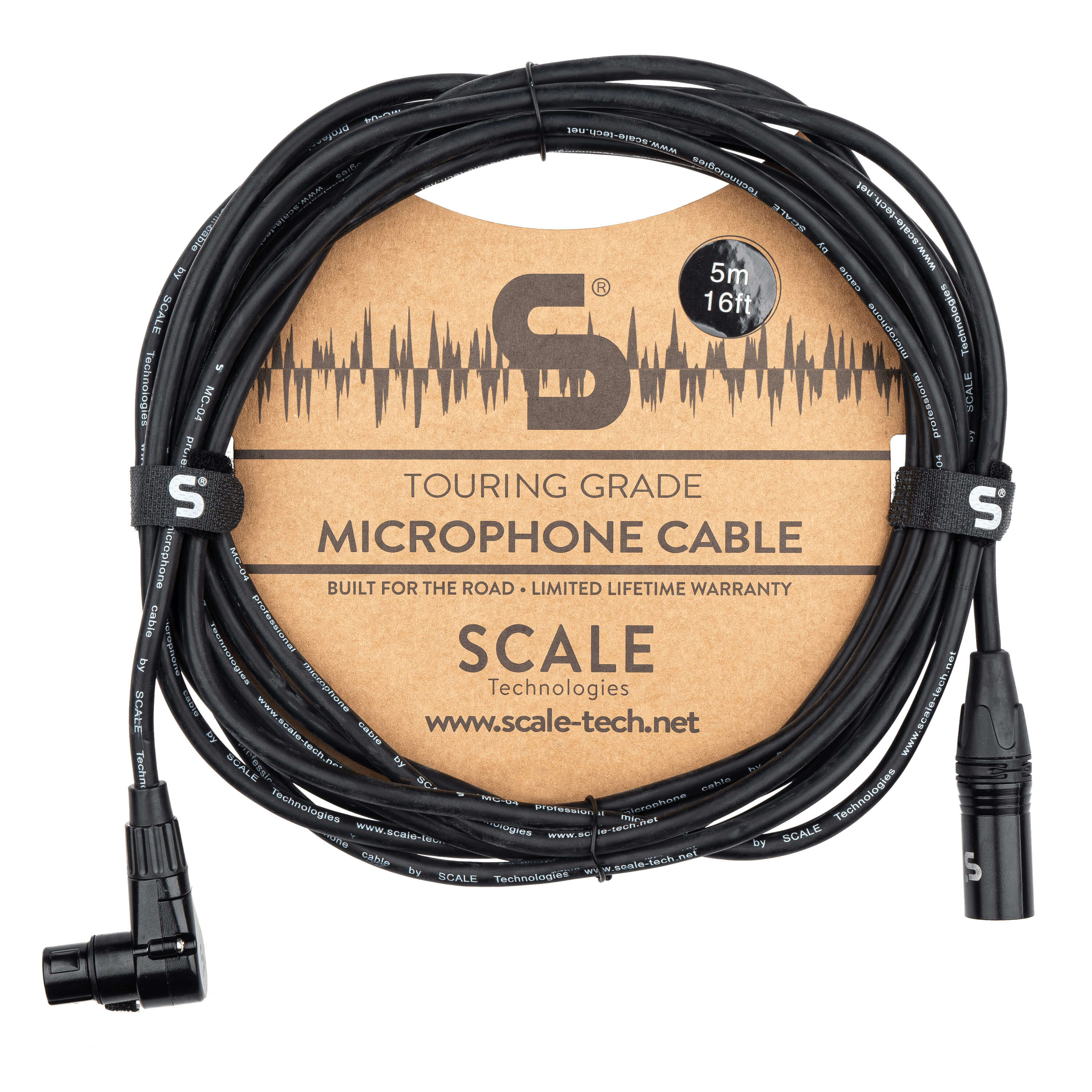
The Scale TGM-AFM is the practical alternative when the direction a cable leaves its connector matters. It lists a custom angled XLR connector alongside a standard XLR connector, a 6.5 mm jacket, oxygen-free copper conductors and spiral shielding.
At €14.39 for 5 m, it costs the same as the SGM-FM in this comparison. It comes in 2.5 m, 5 m and 7.5 m lengths, and its product listing includes two cable straps.
Our take: consider it where a straight connector would force an inconvenient cable route. Check the product photos, connector orientation and the clearance around your socket before ordering. An angled connector is helpful only when it points the cable where you need it to go.
Consider another option if: the connector direction would crowd adjacent sockets, or you need a length outside its three listed options.
View the Scale TGM-AFM and check the connector →
What length XLR cable should you buy?
Measure from the microphone's connector, along the stand and the intended floor or desk route, to the interface or mixer. Leave enough slack to reposition equipment without pulling on either socket.
- 1–2.5 m: consider these for a nearby desk or compact recording position, if the measured route fits.
- 5 m: a useful starting point for planning a mic-stand-to-interface route or a compact rehearsal setup.
- 7.5–10 m: consider these when the cable must follow a longer route around a room or performance area.
- 15 m: available in the TGM-FM range when your measured route calls for it.
These are routing examples, not guarantees that a particular length will fit your room. Avoid buying a cable that is just long enough in a straight line but leaves no room to move a stand.
What matters beyond the price?
Match the connections to your equipment
For a conventional microphone with a three-pin XLR output and an interface or mixer with an XLR microphone input, check that you are choosing the matching XLR microphone cable. A cable with a quarter-inch plug is a different connection choice, even when “balanced” appears in both descriptions. Check the equipment's input requirements rather than buying by connector appearance alone.
Understand what balanced audio can do
A balanced connection uses compatible equipment and cabling to help reject interference. The connector alone does not make an entire signal path balanced. Focusrite's guide to balanced and unbalanced audio explains why the equipment at both ends matters.
Read “4-core” carefully
All three Scale listings describe their twinning construction as two conductors plus two filled PVC tubes. That description should not be confused with four signal conductors. We have compared the stated construction without treating the marketing name as proof of a particular noise-rejection measurement.
Spend on the feature you will actually use
In this shortlist, the useful differences are price, jacket construction, connector angle and available lengths. A higher price alone does not demonstrate better recorded sound. Choose the option that fits the job, and keep the cable routed so that connectors are not under tension.
Frequently asked questions
Can I get an XLR microphone cable for less than €30?
Yes. The three 5 m cables in this guide were priced at €12.59–€14.39 when checked for Spain. Select the exact length you need and check its current price before ordering.
Which of these is best for a home studio?
The TGM-FM is our value starting point if its straight connectors and available lengths suit your setup. Choose the SGM-FM if you prefer its woven jacket, or the TGM-AFM if the angled connector makes routing easier. None is automatically a better fit just because its range name says “Studio” or “Touring”.
Is an angled XLR connector better than a straight one?
It depends on the socket position and cable route. An angled connector can direct the cable along a more convenient path, but it can also face the wrong way or interfere with nearby connections. Check clearance before choosing.
Does a more expensive microphone cable always sound better?
No such conclusion follows from price alone. This guide does not include comparative audio measurements. Its recommendations concern the documented features and price of each cable, not an unsupported promise to improve your microphone's tone.
Choose the cable that fits your setup
Start with the TGM-FM for value, the SGM-FM for a woven jacket, or the TGM-AFM for an angled connection. Then select the length that follows your actual cable route.